-
tel:
+86-13606193016 -
email:
info@suhangmachine.com

Light Steel Framing Machines: The Engine Behind Modern Construction Innovation
Dec 02, 2025
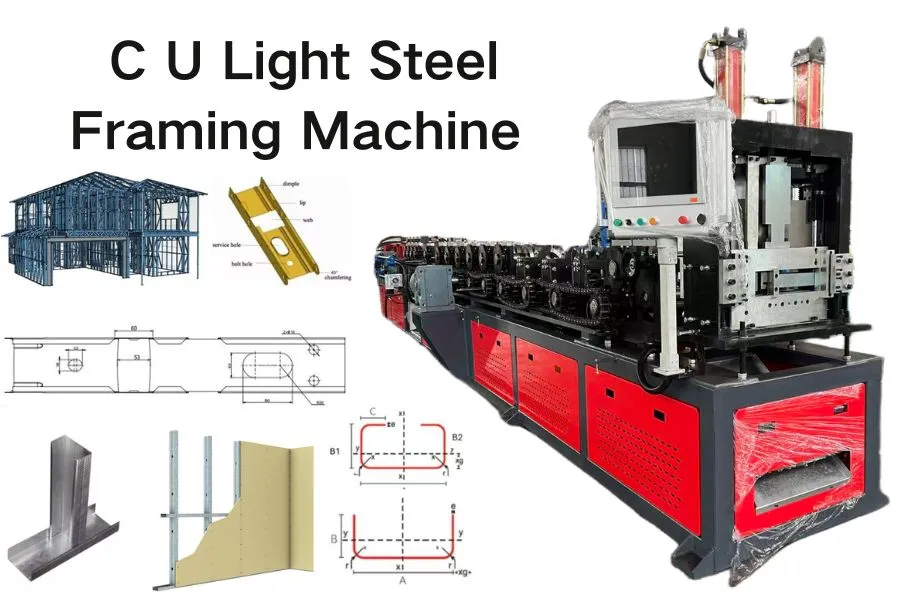
Light Steel Framing Machines: The Engine Behind Modern Construction Innovation
Introduction: Manufacturing the Future of Construction
Behind every high-performance light-gauge steel framing system is a sophisticated piece of industrial equipment: the light steel framing machine. These advanced manufacturing systems are revolutionizing how building components are produced, enabling unprecedented precision, efficiency, and customization in construction. From residential homes to skyscrapers, light steel framing machines are empowering manufacturers to meet the growing global demand for sustainable, resilient building solutions.
This technical deep-dive explores the capabilities of modern light steel framing machines, their operational processes, and how they're shaping the future of prefabricated construction.
.webp)
.webp)
Evolution of Light Steel Framing Technology
From Manual to Automated
The journey of light steel framing machines has evolved dramatically:
-
First Generation (1980s): Basic roll formers with manual feeding and cutting.
-
Second Generation (1990s): Semi-automated systems with hydraulic controls.
-
Third Generation (2000s): CNC-controlled machines with servo technology.
-
Current Generation (2020s): Smart factories with IoT integration, AI optimization, and robotic automation.
Modern Machine Capabilities
Today's advanced systems offer:
-
Production Speeds: 30-60 meters per minute.
-
Length Accuracy: ±0.5mm precision.
-
Automatic Tool Changing: Minutes instead of hours.
-
Real-time Monitoring: IoT sensors for predictive maintenance.
Core Components of Light Steel Framing Machines
1. Decoiler & Entry System
-
Hydraulic Decoiler: Handles coils up to 10 tons.
-
Automatic Edge Guide: Maintains material alignment.
-
Peel-and-Thread Systems: Reduce setup time between coils.
2. Pre-Punching & Notching Stations
-
Servo-Powered Punch Units: Create openings for utilities and connections.
-
Multi-Tool Heads: Handle various hole patterns and sizes.
-
Quick-Change Tooling: Minimize changeover time between profiles.
3. Roll Forming Section
-
Modular Design: 10-25 forming stations.
-
Hardened Steel Rolls: D2 tool steel with precise grinding.
-
Independent Drive Systems: Each station powered separately for flexibility.
4. Cutting & Output Systems
-
Flying Cut-Off Units: Cut while material is moving.
-
Servo-Controlled Saws: Clean, burr-free cuts.
-
Automated Stacking: Robotic arms for consistent bundle formation.

Advanced Features in Modern Machines
Smart Manufacturing Integration
-
Digital Twin Technology: Virtual simulation of production processes.
-
Predictive Maintenance: AI algorithms predict component failures before they occur.
-
Energy Monitoring: Track and optimize power consumption in real-time.
Customization Capabilities
-
Quick Profile Change: Switch between different stud/track profiles in under 10 minutes.
-
Variable Hole Patterns: Programmable punching for custom applications.
-
Integrated Marking: Laser etching for part identification and traceability.
Quality Assurance Systems
-
Vision Inspection: Cameras detect surface defects and dimensional errors.
-
Ultrasonic Thickness Gauging: Continuous material verification.
-
Statistical Process Control: Real-time data analysis for quality optimization.
Applications in Prefabricated Construction
Panelized Wall Systems
-
Complete Wall Panels: Manufactured with openings for doors and windows.
-
Integrated Insulation: Foam or batt insulation installed during fabrication.
-
Pre-Installed Utilities: Electrical chases and plumbing penetrations.
Truss & Joist Production
-
Floor Joists: Long-span systems for commercial applications.
-
Roof Trusses: Engineered for specific load requirements.
-
Mezzanine Systems: Support structures for industrial spaces.
Custom Architectural Elements
-
Curved Walls: Specialized rollers create radius profiles.
-
Decorative Elements: Custom shapes for architectural features.
-
Solar Panel Mounting: Integrated framing for renewable energy systems.
Economic & Environmental Benefits
Cost Efficiency Analysis
| Factor | Traditional Framing | Machine-Produced LGS |
|---|---|---|
| Material Waste | 15-20% | 2-5% |
| Labor Hours | 100% Baseline | 40-60% Reduction |
| Production Speed | 1x | 3-5x Faster |
| Quality Control | Variable | Consistent & Documented |
Sustainability Impact
-
Reduced Carbon Footprint: Steel framing contains recycled content and is fully recyclable.
-
Energy Efficiency: Precision manufacturing reduces energy consumption.
-
Resource Optimization: Computer-controlled nesting minimizes material waste.
Future Trends & Innovations
Industry 4.0 Integration
-
Cloud-Based Production: Remote monitoring and control of multiple facilities.
-
Blockchain Traceability: Immutable records of material sourcing and production data.
-
Augmented Reality Maintenance: AR guides for troubleshooting and repairs.
Advanced Materials Processing
-
Composite Integration: Embedding other materials during roll forming.
-
Smart Coatings: Corrosion-resistant finishes with embedded sensors.
-
Lightweight Alloys: Aluminum-magnesium combinations for specific applications.
Global Market Expansion
-
Modular Designs: Containerized machines for rapid deployment.
-
Regional Adaptation: Machines configured for local building codes and materials.
-
Training Systems: Virtual reality simulators for operator training.
Selecting the Right Machine for Your Needs
Key Considerations
-
Production Volume: Daily output requirements and growth projections.
-
Material Specifications: Steel grades, thickness ranges, and coating requirements.
-
Profile Complexity: Number of different shapes and frequency of changeovers.
-
Automation Level: Balance between capital investment and labor savings.
-
Support Services: Availability of technical support, training, and spare parts.
Implementation Strategy
-
Pilot Program: Start with a basic system and expand capabilities.
-
Staff Training: Invest in comprehensive operator and maintenance training.
-
Process Integration: Ensure compatibility with existing workflows and software systems.
Conclusion: Building Smarter with Advanced Technology
Light steel framing machines are more than just manufacturing equipment—they're strategic assets that enable construction companies to compete in an increasingly demanding market. By combining precision engineering with smart technology, these machines are helping to build a more sustainable, efficient, and resilient built environment.
As construction continues to evolve toward greater prefabrication and digital integration, light steel framing machines will play an increasingly critical role in shaping the cities and communities of tomorrow.
Interested in bringing light steel framing production in-house? Our engineering team can help you assess requirements, select appropriate equipment, and develop a comprehensive implementation plan tailored to your specific needs and goals.


Related News

.webp?x-oss-process=image/resize,w_100/quality,q_100)

Contact US
Product Information
Quantity
Unit
Piece
Support order samples, customization, wholesale direct, and complete payment. If the product you look for does not have corresponding customized content, pls fill out the form below to contact us, and we will reply ASAP.