-
tel:
+86-13606193016 -
email:
info@suhangmachine.com

Steel vs. Wood: Why Steel Frames Are the Smarter Choice for Builders
Mar 16, 2026
Steel frame and wood frame are two of the most widely used structural systems in modern construction. Both materials play important roles in residential, commercial, and industrial buildings. Choosing between steel framing and wood framing depends on several factors, including strength, cost, durability, environmental impact, and construction efficiency. While both systems have advantages and disadvantages, understanding their differences helps builders and designers select the most appropriate material for a specific project.
In the more recent years, many builders have swapped from using timber to steel frames for a variety of reasons; however, many people are still apprehensive about whether they really are better than wooden frames which have built homes for as long as we can remember! We’re here to tell you everything you need to know about the difference between steel frames vs timber frames, and answer the ultimate question which is better?

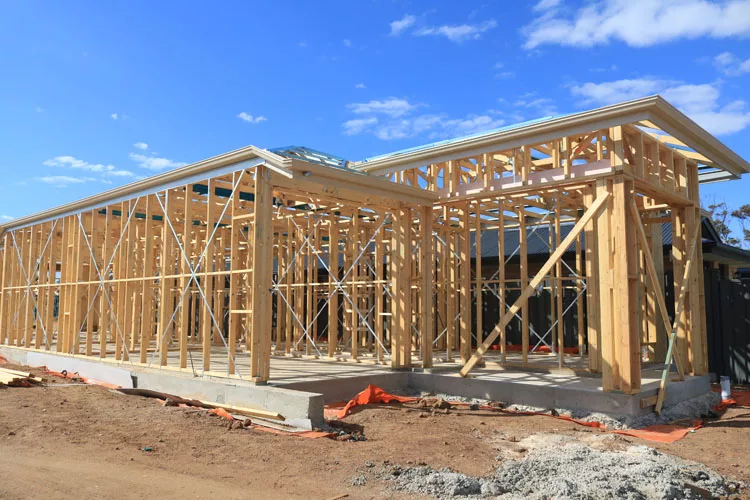
Timber Frames
Pros of Timber House Frames
- Easy Maintenance
Timber frames can be easily repaired, making them much more durable and withstanding over time. More people are versed in working with timber and renovations are much easier to undertake. If erected properly, timber can withstand high impact earthquakes and weather conditions. - Cost Effective
Timber is ultimately cheaper than steel frames but not necessarily worse in quality. It takes a significantly shorter time to construct, meaning that the labour costs are also lower. Additionally, it is more readily available than steel frames and provides insulation, making the house conserve heat and save costs on heating in the future. - Environmentally Friendly
Because timber is a natural and renewable resource, many environmentally conscious people prefer to build their house with ethically sourced timbers. It also retains carbon dioxide, meaning that it is less energy dependent than steel.
Cons of Timber House Frames
- Termites
The main issue that affects timber frames is termites. Without installing a proper termite resistant system, this can cause termite infestations which are very expensive to rectify. If you were to build with timber frames, you need to ensure that its construction is executed perfectly.
- Susceptible to weather conditions
Timber frames are a lot more susceptible to damage in hot weather conditions. Timber runs the risk of catching on fire in high temperatures and if constructed poorly. Additionally, timber can expand and shrink in different weather conditions, or run the risk of developing mould in humidity.
- Soundproofing
Although timber insulates heat effectively, sound insulation serves to be poor through wood. To avoid transmitting sound through the house, you will need to implement additional sound proofing system
Steel Frames
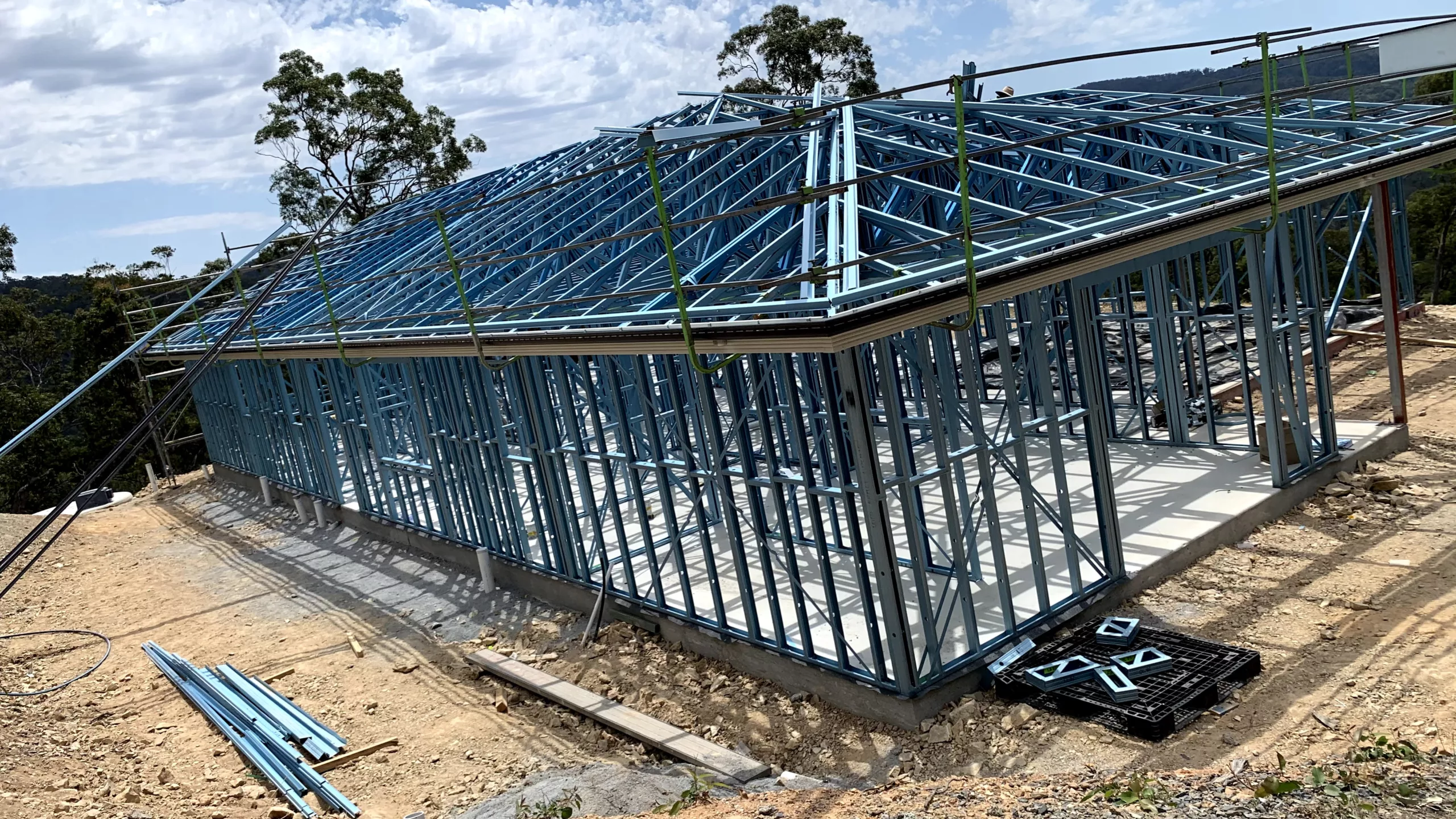
Pros of Steel House Frames
- Strength and Versatility
Steel frames are most advantaged for their tensile strength, security, but also their capability to change shapes and mold into custom designs that are not possible with timber frames. Expansion and Renovation are much more possible with steel frames.
- Weatherproof
Unlike timber frames, steel frames aren’t combustible and can retain its shape at high temperatures. They can withstand extreme weather conditions and don’t run the risk of developing damage in humidity or wet weather.
- Pest-Free
One of steel frames biggest benefits is its avoidance of pest infestations. With this, they are much easier to maintain and don’t run the risk of repairs that can cost up to thousands of dollars.
Cons of Steel House Frames
- Higher Cost
Ultimately, steel serves to be more costly due to the materials and labour associated with its construction. Steel requires more intensive labour and the materials used to support the insulation of steel walls increase the overall cost.
- Environmentally Unfriendly
The production of steel requires large amounts of energy and remains one of the major polluters on the Earth. Steel mills leave a huge carbon footprint throughout the process and requires more energy to get it sourced for construction.
- Thermal Conductivity
Because steel conducts a remarkable amount of heat, this means that insulation must be prioritised to counteract the effect of this. When heat is conducted by steel, the steel wall insulations is compromised meaning that the building is unable to retain energy efficiently
Unmatched Strength and Durability: Why Steel Frames Outlast Wood
Steel frames are known for being strong and lasting a long time, which makes them a better pick for building than wood. Wood can bend, crack, or rot as time goes by, but steel stays strong even in tough conditions. Steel can handle bad weather, heavy weights, and strong winds that might harm buildings made with wood. Because steel lasts so long, buildings stay sturdy for many years, making it a smart choice for builders who want something that will last.
Fire Resistance: How Steel Frames Provide Superior Safety Over Wood
When choosing materials for building frames, fire resistance is very important. Steel frames are much better than wood because they do not catch fire or help flames spread. Wood burns easily and can fall apart quickly in a fire. Steel's natural ability to resist fire helps keep the building and its people safe, giving peace of mind and lowering the chance of severe fire damage. This makes steel frames a safer and more dependable choice, especially in areas where fires are common.
Pest-Proof Protection: Why Steel Frames Are Impervious to Termites and Insects
Steel does not attract pests like termites or carpenter ants, which can damage wooden structures and lead to expensive repairs. Because steel is resistant to pests, our buildings are made with it to last longer and need less maintenance. This means fewer chemicals are needed, making steel a more sustainable choice for construction.
Faster Construction: How Steel Frames Speed Up Building Projects
Steel frames that are made in a factory and sent to the construction site ready to be put together quickly. This saves a lot of time compared to using wood, which needs cutting and shaping on-site. The steel parts are made to exact measurements, making installation faster. With less time spent on construction, labor costs go down, and projects can finish sooner. This speed helps builders take on more jobs and complete them quickly.
Long-Term Cost Efficiency: How Steel Frames Save Builders Money Over Time
Prefabex uses steel frames for construction, which may cost more upfront than wood but saves money over time. Our steel frames last longer and need less upkeep. This leades to lower costs in repairs and insurance. It resists fire, pests, and weather, which means fewer problems down the road. Plus, our steel structures can be recycled, cutting down on expenses when a building is torn down. Builders who select Prefabex’s steel can expect to spend less on maintenance and see a better return on their investment later on.
Sustainability and Recyclability: Why Steel Frames Are the Eco-Friendly Choice
Steel can be recycled completely, so frames can be reused without losing strength. This helps lower the environmental impact of construction. Unlike wood, which comes from trees and can lead to deforestation, steel is plentiful and can be recycled over and over. Builders who care about sustainability can count on our steel frames to meet green building standards and support a healthier construction industry.

Related News

.webp?x-oss-process=image/resize,w_100/quality,q_100)

Contact US
Product Information
Quantity
Unit
Piece
Support order samples, customization, wholesale direct, and complete payment. If the product you look for does not have corresponding customized content, pls fill out the form below to contact us, and we will reply ASAP.